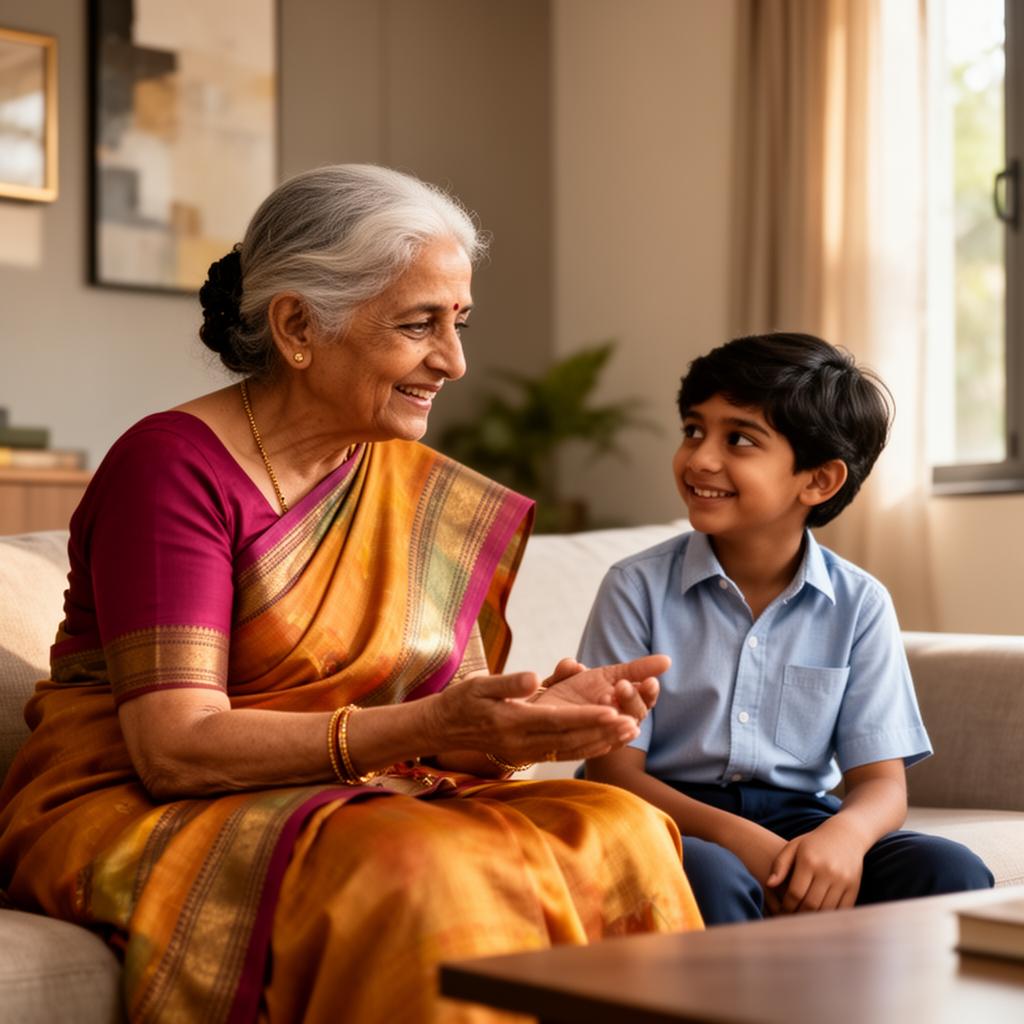
What positive parenting really means for Indian families — blending Vedic wisdom and neuroscience into a uniquely Indian approach.
Here is something that consistently moves me in my 22+ years of this work:
Every time modern neuroscience and developmental psychology publishes a new finding about what children need to thrive, I find the principle was already present — often more elegantly stated — in Indian philosophical and cultural tradition.
This is not nostalgia. This is not cultural chauvinism. This is something I have documented carefully across hundreds of coaching sessions and thousands of hours of reading in both traditions.
We did not need to import positive parenting from the West. We needed to rediscover what we already had — and understand why it works, using the language of science that speaks to the modern Indian parent.
This article is my attempt to do exactly that.
First: What Positive Parenting Actually Means (And What It Doesn't)
I need to address the most damaging misconception before we go any further, because it is causing real harm in Indian homes.
Positive parenting is not:
Permissiveness • No consequences • Endless negotiation with your child • Apologizing every time you set a limit • Prioritizing your child's preferences above all family needs
I encounter parents — especially in urban professional families — who have absorbed a social-media version of "positive parenting" that has essentially eliminated parental authority entirely. Their children are demanding, entitled, and anxious — because firm, loving boundaries are a developmental need, and they are not receiving them.
That is not positive parenting. That is the overcorrection from parents who were raised with too much harshness, now swinging to the opposite extreme.
What positive parenting actually means: Your child experiences your authority as both firm and loving simultaneously — not firm or loving, not alternating between the two, but genuinely both at the same time.
This is the integration. And it is, interestingly, exactly what the Indian ideal of the parent-elder has always been — the figure who is deeply respected AND deeply loved. Not feared. Not permissive. Both things at once.
Ahimsa: The Parenting Principle Before Its Time
The principle of Ahimsa — non-violence — is most commonly understood in its physical dimension: don't harm the body. But the deeper application of Ahimsa extends to thought, word, and action.
Ahimsa in relationship means: I will not deliberately harm another being — including through words, tone, comparison, shaming, or emotional manipulation.
Modern neuroscience has a clinical name for parenting that consistently applies verbal and emotional harm: psychological maltreatment. And the research shows that its effects on child development are comparable to physical abuse — impairing stress response systems, damaging attachment security, and creating neural patterns of threat vigilance that persist into adulthood.
Ahimsa in parenting is not a soft or sentimental principle. It is a developmental imperative, confirmed by the most rigorous child development research available.
When you choose not to shame your child for a failing grade, when you choose not to compare them to their cousin, when you choose to address the behavior without attacking the person — you are practicing Ahimsa. You are living an ancient principle. And you are doing what neuroscience now proves is the healthiest thing for your child's developing brain.
The Gurukul Model: What Self-Determination Theory Rediscovered
The ancient Gurukul educational system — in which students lived with and learned from a teacher in an environment of deep mentorship, intrinsic engagement, and learning connected to real life — was abandoned in the colonial period in favor of rote-instruction, examination-based schooling.
In 1985, psychologists Edward Deci and Richard Ryan published Self-Determination Theory — a framework that describes the conditions under which human beings are most motivated, most engaged, and most capable of deep learning. Their three core conditions: autonomy (a sense of choice and ownership), competence (the experience of mastering meaningful challenges), and relatedness (a caring, supportive relationship with the teacher or parent).
This is the Gurukul model. Repackaged in Western academic language, published in prestigious journals, and taught in education programs around the world as a revolutionary insight.
We had it. We let it go. We can reclaim it.
For parents, Self-Determination Theory — or Gurukul parenting — means: give your child meaningful challenges they can actually master (not too easy, not overwhelming), support their growing autonomy rather than managing every choice, and prioritize the quality of your relationship with your child as the context in which all learning occurs.
Panchatantra: 2,500 Years of Brain-Compatible Learning
Why did ancient India teach moral philosophy, practical wisdom, and ethical navigation through animal fables rather than direct instruction?
This is not coincidence. It is sophisticated pedagogy.
The brain encodes moral and behavioral learning most effectively through narrative. Story activates more regions of the brain simultaneously than direct instruction — including the limbic system (emotional engagement), the motor cortex (embodied simulation), and the prefrontal cortex (judgment and meaning-making). A lesson delivered through story is remembered more accurately, more emotionally, and more durably than a lesson delivered as instruction.
Research by psychologist Jerome Bruner on "narrative intelligence" and Jonathan Haidt's work on moral psychology both confirm what the Panchatantra architects understood intuitively: to reach the moral intelligence of a human being, you must go through story.
When you tell your child the story of the turtle and the ocean — about the sea erasing the turtle's footprints because a hunter was following, and how sometimes mummy and papa also take away certain joys because they want to protect us from people who could harm us — you are not offering a sentimental tale. You are using the most neurologically effective method of moral instruction ever devised.
Bring storytelling back to Indian homes. Not as tradition. As the most powerful parenting tool you have access to.
Ready to Transform Your Parenting?
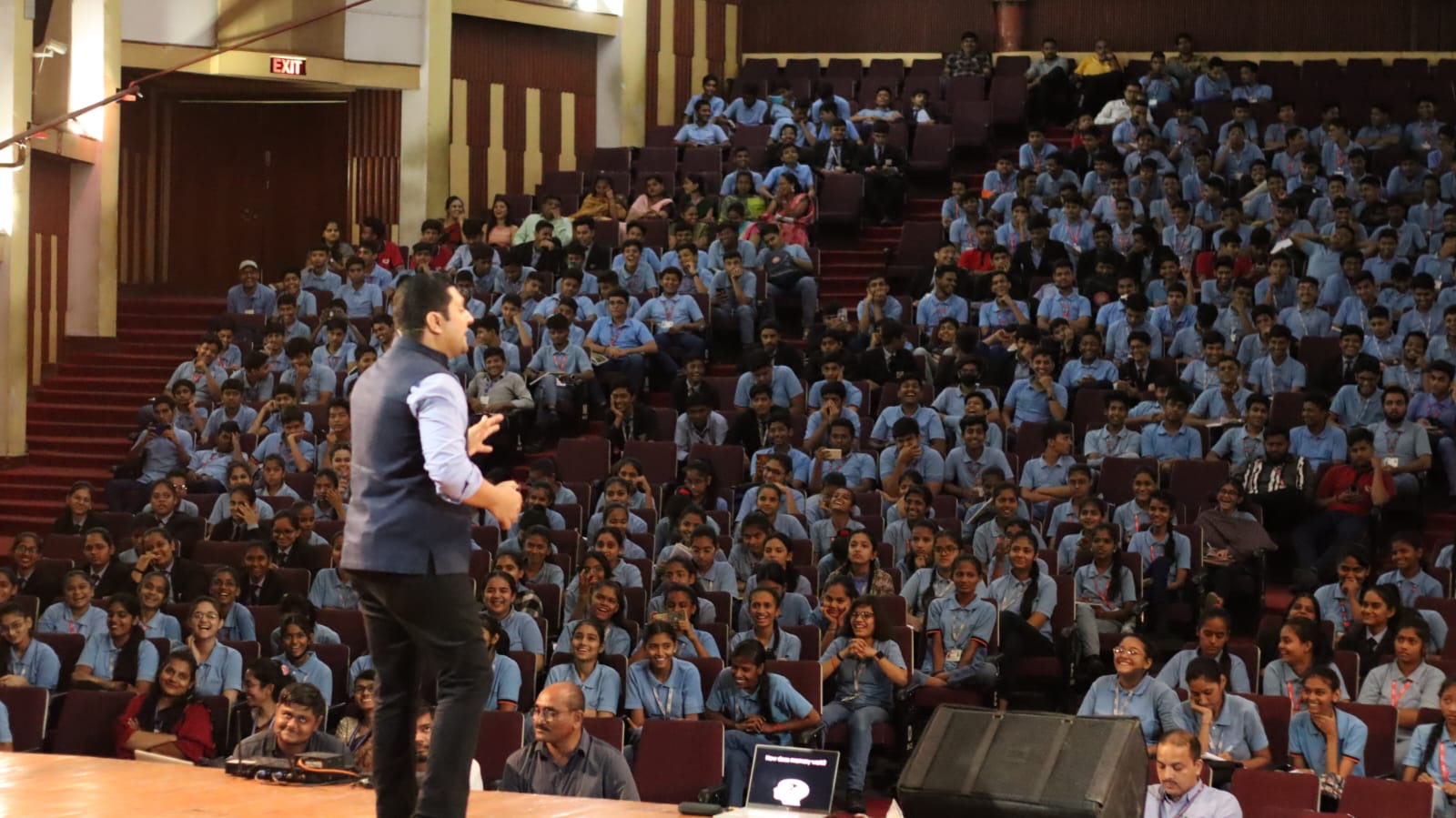
Join India's leading parenting coach Parikshit Jobanputra for a FREE live Masterclass.
Physical Touch: The Oxytocin Science Behind What We Already Did
The Indian tradition of daily oil massage for children, the physical closeness of joint family living, the culture of physical affection between grandparents and grandchildren — these are not sentiment. They are science.
Physical touch triggers the release of oxytocin — the bonding neurochemical — which directly regulates the stress response system, builds secure attachment, reduces cortisol, and promotes the kind of nervous system regulation that underlies healthy emotional development.
Children who receive consistent, warm physical touch from caregivers develop more regulated stress response systems, more secure attachment, higher pain thresholds, and stronger immune function — than children raised in low-touch environments.
The Indian tradition of physical closeness — the hand on the shoulder, the head in the lap, the embrace after a difficult day — is not "mollycoddling." It is one of the most powerful developmental interventions available to a parent. Use it deliberately. Use it consistently. Especially as children get older and the cultural pressure to pull back from physical affection increases.
Family Rituals: The Neuroscience of Belonging
Research by family psychologist Barbara Fiese at the University of Illinois has shown that family rituals — consistent, repeated shared practices that carry emotional meaning — are among the strongest protective factors for child mental health and family resilience.
Children in families with strong rituals show higher self-esteem, better academic outcomes, lower rates of substance use, and stronger recovery from adverse life events — compared to children in families without them.
The Indian tradition of family rituals — the shared evening prayer, the Sunday family meal, the festival preparation, the bedtime stories, the daily practices that mark time and create a sense of shared identity — is a profound psychological resource that modern families are abandoning, often without understanding what they are losing.
You do not need elaborate rituals. You need consistent ones. The dinner where phones are absent. The weekend activity that belongs to the family. The annual celebration that everyone knows is coming, that everyone participates in, that creates the experience of being part of something that has history and continuity.
These are not old-fashioned. They are neurologically essential.
Integrating Ancient Wisdom Without Romanticizing the Past
I want to be careful here, because there is a risk in this conversation of slipping into uncritical nostalgia — the belief that everything in "the old way" was wisdom and everything modern is a departure to be corrected.
This is not accurate, and it is not useful.
Traditional Indian parenting also carried real harms: rigid gender expectations that limited girls' aspirations and constrained boys' emotional expression, corporal punishment normalized as discipline, and authoritarian structures that left little room for a child's individual voice or dissent.
The work of positive parenting in the Indian context is not "return to tradition." It is selective integration — identifying which elements of our cultural and philosophical inheritance align with what we now understand about healthy child development, and consciously discarding the elements that do not.
Ahimsa in relationship: keep. Corporal punishment as discipline: discard. The Gurukul model of intrinsic motivation and mentorship: keep. Rigid gender-based expectations on emotional expression: discard. Storytelling as moral education: keep. Suppression of a child's individual voice in favor of unquestioning obedience: discard.
This selective, conscious integration — taking what serves the child's flourishing and releasing what does not — is itself an act of wisdom. It honors the tradition without being imprisoned by all of its contents.
A Daily Practice for Indian Parents
I want to leave you with a simple, concrete daily practice that integrates several of the principles in this article.
Each evening, for just ten minutes: sit with your child, without devices, and either tell or ask for a story from the day — framed not as "what did you do" but as "tell me a story about today." Hold their hand or place a hand on their shoulder while they speak. Listen with the intention of understanding, not correcting. Close with a moment of gratitude — one thing from the day that you are both thankful for.
This single practice integrates storytelling, physical touch, ritual, and Ahimsa-based listening — the four pillars covered in this article — into ten minutes that fit into even the busiest Indian household.
Small. Consistent. Profound in its cumulative effect.
"Connection before correction. Awareness before advice. Love before lesson."
— Parikshit Jobanputra, 22+ years of parenting coaching
Frequently Asked Questions
Your child experiences your authority as firm AND loving simultaneously — not firm or loving. This is the traditional Indian parenting ideal updated for modern understanding.
Yes. Concepts like Ahimsa in relationship, intrinsic motivation from Gurukul systems, and joint family emotional scaffolding all map directly to modern positive parenting research.
Happy Parenting Club
— Parikshit Jobanputra
Join the Conversation
Share your thoughtsLoved a takeaway? Have a question? Drop a comment below — Parikshit personally reads every thoughtful response.
Ready to Transform Your Parenting?
Prepare your child for the Future of AI with India's leading parenting coach.